
How Long Does It Take to Manufacture Custom Cosmetics?
One of the most important questions for a beauty brand planning a new product launch is: how long does cosmetic manufacturing take?
The answer depends on the product, formula, packaging, order quantity, customization requirements, and number of sample revisions. A simple private label makeup product may follow a shorter development process, while a fully customized product can require additional formula development, testing, packaging development, and approval time.
Understanding each stage of cosmetic manufacturing can help brands create a more realistic launch schedule and avoid unnecessary delays.
How Long Does Cosmetic Manufacturing Usually Take?
There is no single standard timeline for every cosmetic product. Different manufacturers publish different lead times, and the actual schedule depends on the project specifications. Some suppliers report bulk production windows of a few weeks after sample approval, while more complex custom projects can take several months from development to finished products.
For this reason, beauty brands should ask their manufacturer for a project-specific timeline rather than relying only on a general industry estimate.
The Main Stages of Cosmetic Manufacturing
A typical custom cosmetics project may include the following stages:
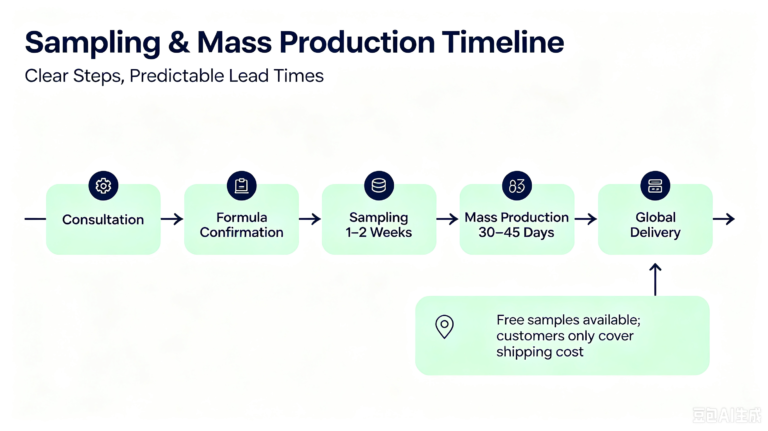
Product Brief → Formula Development → Sample → Sample Approval → Packaging → Production → Quality Control → Packing → Shipment
Some of these stages can be completed at the same time. For example, packaging sourcing can often begin while formula samples are being developed, which can help reduce the overall project timeline.
1. Product Consultation and Project Brief
The first stage is defining the product requirements.
The brand should provide information such as:
- Product type
- Target market
- Desired texture
- Finish
- Color or shade
- Packaging concept
- Target quantity
- Target price
- Expected launch date
A clear product brief helps the manufacturer understand the project and determine which development route is appropriate.
2. Formula Selection or Development
There are generally two approaches to formula development.
Existing Formula
If a manufacturer already has a suitable mature formula, the brand may be able to select and customize it according to its requirements.
This can reduce development time compared with creating a completely new formula.
Custom Formula Development
If the brand requires a specific texture, finish, performance, color, or ingredient profile, the manufacturer may need to develop or modify the formula.
Custom formulation usually requires more development work and may involve additional sample revisions and testing.
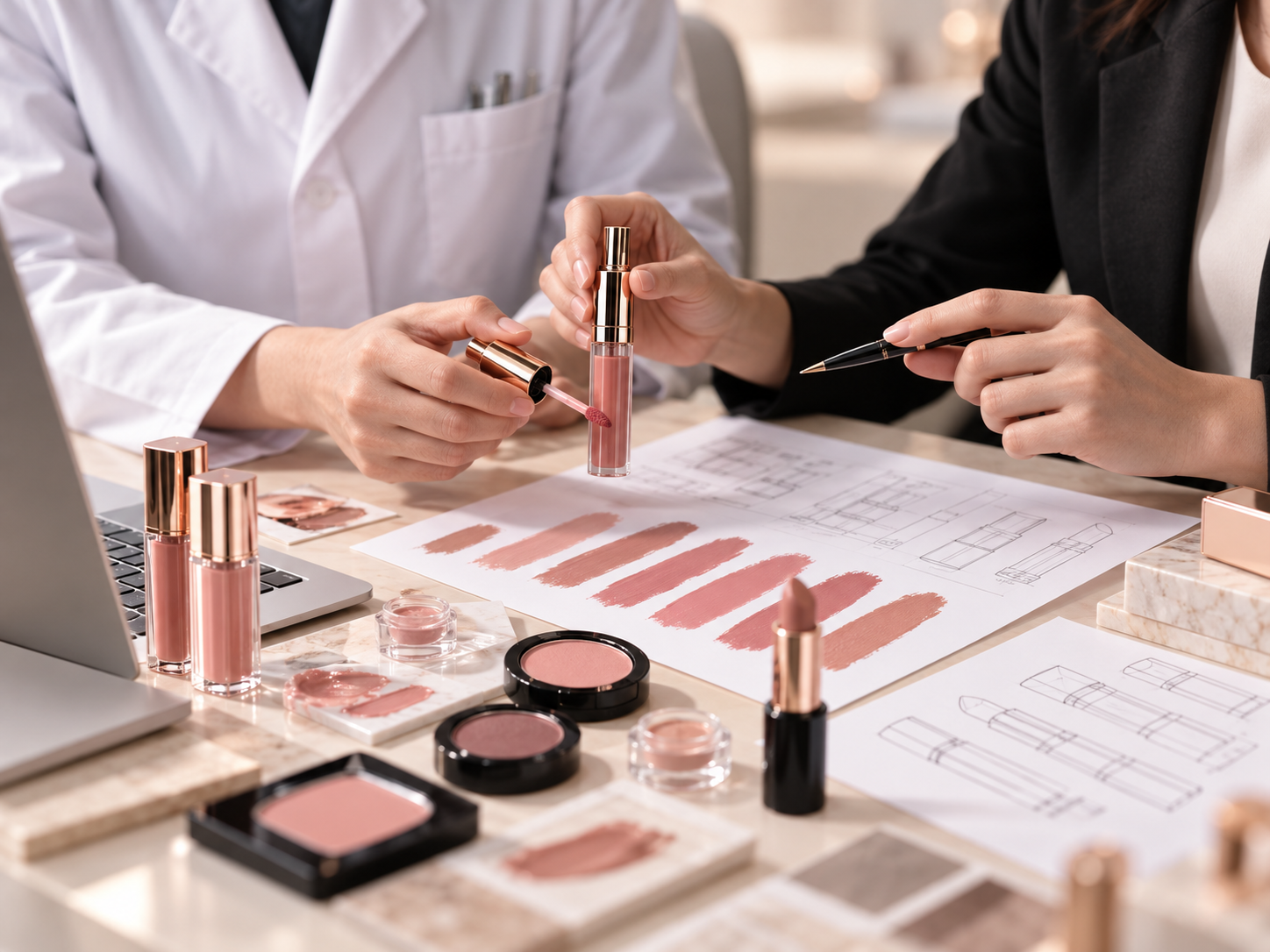
3. Sample Development
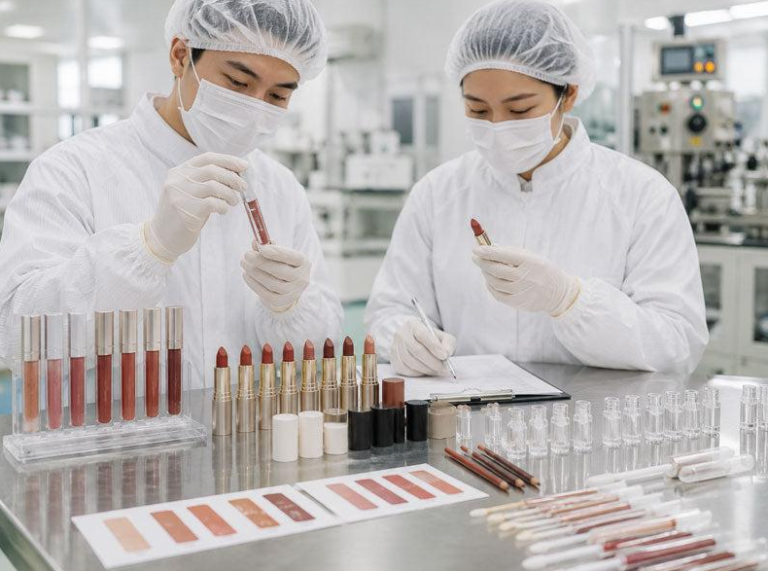
After the product requirements are confirmed, the manufacturer prepares samples for evaluation.
For makeup products, the sample may need to be checked for:
- Color
- Texture
- Pigmentation
- Coverage
- Finish
- Application feel
- Packaging compatibility
Sample development can be relatively quick for an existing formula, while a custom formula may require multiple rounds of adjustment. Published manufacturer timelines show that sample development can range from several days to several weeks depending on the project.
4. Sample Testing and Approval
Once the sample is received, the brand should test it carefully and provide clear feedback.
Sample revisions are one of the factors that can extend a project timeline. If feedback is incomplete or multiple specifications change during development, additional sample rounds may be required.
To keep the project moving, brands should prepare consolidated feedback and clearly identify which changes are required.
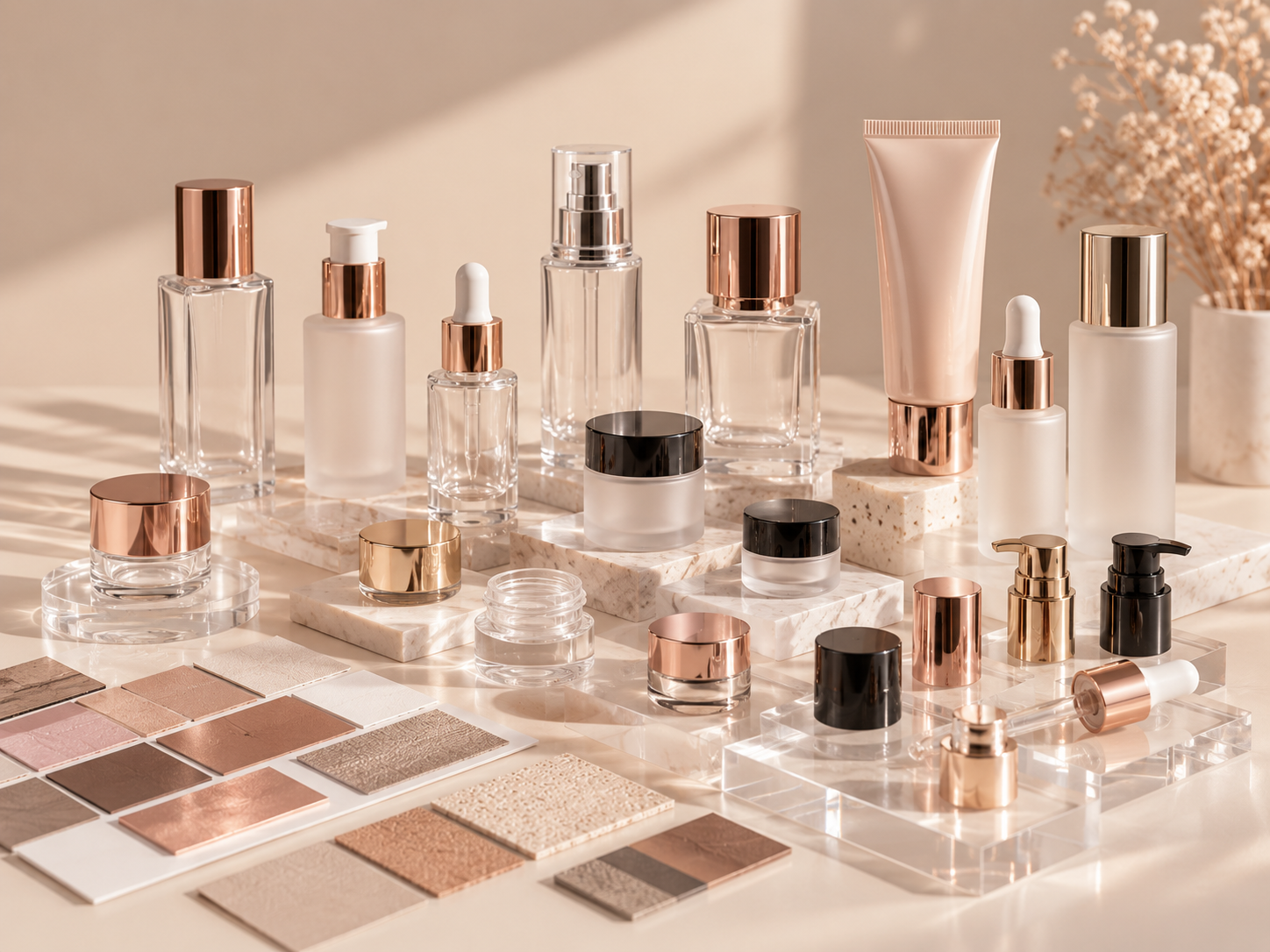
5. Packaging Development and Sourcing
Packaging can have a significant impact on the overall manufacturing schedule.
Stock packaging may be available more quickly, while custom packaging can require additional time for design confirmation, tooling, production, printing, decoration, and quality inspection.
For this reason, packaging should ideally be discussed at the beginning of the project rather than after the formula has already been approved.
6. Artwork and Logo Confirmation
Before packaging production, the brand needs to confirm the artwork and product information.
This may include:
- Logo
- Brand colors
- Product name
- Shade names
- Label information
- Outer box artwork
- Printing specifications
Changes made after printing or packaging production has started can cause additional delays and costs.
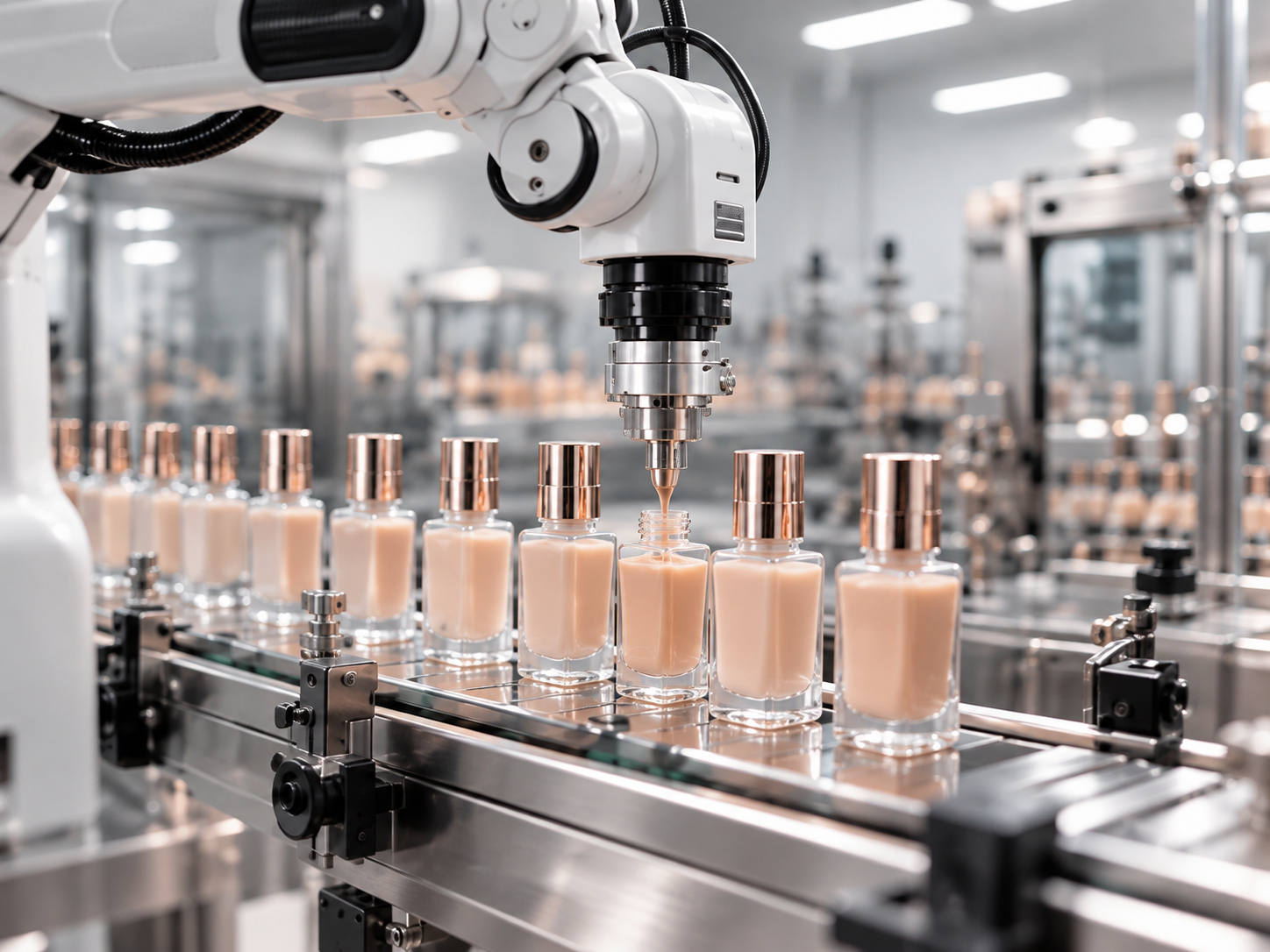
7. Mass Production
Once the formula, sample, packaging, artwork, quantity, and production specifications are approved, the manufacturer can schedule mass production.
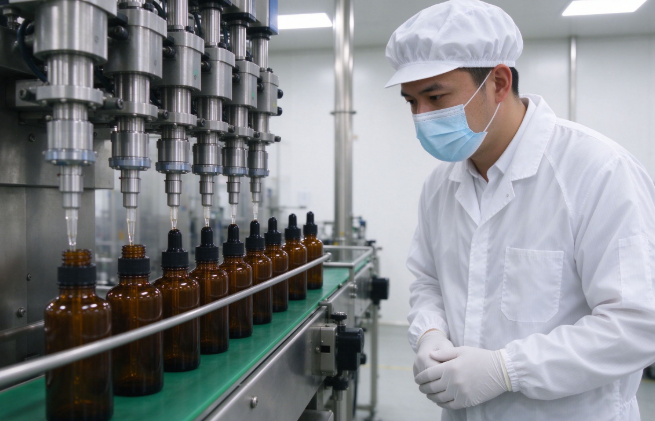
A typical color cosmetics production process may include:
- Raw material preparation
- Bulk formula preparation
- Color adjustment or checking
- Filling or pressing
- Assembly
- Logo and packaging application
- Quality inspection
- Final packing
Production time depends on the product type, quantity, number of SKUs, packaging requirements, and factory production schedule.
8. Quality Control and Final Packing
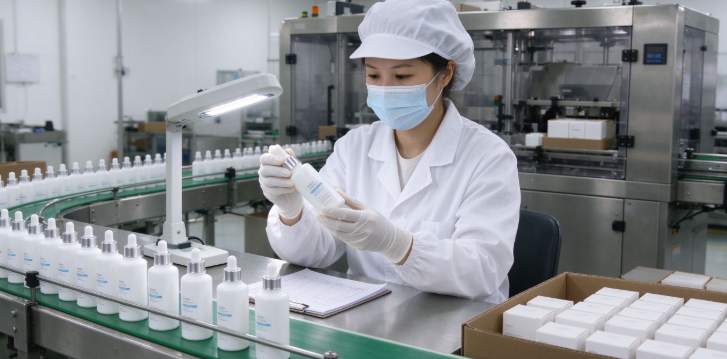
After production, finished products need to go through the manufacturer’s quality control procedures before shipment.
Depending on the product, inspection may cover appearance, filling quantity, packaging, labeling, assembly, and other agreed specifications.
Once the finished products pass the required inspections, they can be packed and prepared for shipment.
What Can Delay Cosmetic Manufacturing?
Several factors can extend the expected timeline.
Custom Formula Development
Developing a new formula usually requires more time than selecting an existing formula.
Multiple Sample Revisions
If the brand requests repeated changes to color, texture, finish, or performance, the sample stage can take longer.
Custom Packaging
New molds, special materials, complex structures, printing, and decorative finishes may require additional time.
Raw Material Availability
Some ingredients or packaging components may require additional sourcing time, especially when they are customized or have limited availability.
Large Order Quantities
Larger orders may require more production time depending on the number of units, SKUs, and production schedule.
Artwork Changes
Late changes to packaging artwork can delay printing and packaging production.
Slow Sample Feedback
Manufacturing is a collaborative process. Delays in confirming samples, artwork, quantities, or specifications can affect the overall schedule.
How Can Beauty Brands Reduce Manufacturing Delays?
Although not every production factor can be controlled, brands can take several steps to make the development process more efficient.
- Prepare a clear product brief before contacting the manufacturer.
- Confirm the target quantity early.
- Start packaging discussions during formula development.
- Provide clear color and texture references.
- Give consolidated sample feedback.
- Confirm artwork carefully before printing.
- Choose stock packaging when a faster launch is more important than fully customized packaging.
- Discuss the target launch date with the manufacturer from the beginning.
- Leave additional time for shipping and unexpected production changes.
How to Build a Cosmetic Product Launch Timeline
Instead of planning only around the mass production date, brands should work backward from their desired launch date.
A basic planning structure can look like this:
| Stage | Main Task |
|---|---|
| Product Planning | Define product concept, target customer, quantity, and specifications |
| Formula Development | Select or develop the formula |
| Sample Development | Create and evaluate product samples |
| Packaging | Select or customize components and artwork |
| Final Approval | Confirm formula, packaging, artwork, and quantity |
| Mass Production | Manufacture and assemble the products |
| QC & Packing | Inspect and prepare finished goods |
| Shipment | Arrange transportation to the destination market |
The exact duration of each stage should be confirmed with the manufacturer based on the specific product and order.
Private Label vs. Custom Cosmetics: Which Is Faster?
Private label products using existing formulas and available packaging can generally involve fewer development steps than fully customized products.
A custom OEM/ODM project may require additional formula development, shade matching, packaging development, sample revisions, and testing.
However, the actual timeline depends on the manufacturer’s capabilities and the specific requirements of the project. Some stages can also be handled in parallel to improve efficiency.
When Should You Contact a Cosmetic Manufacturer?
It is better to contact a manufacturer before your planned launch date rather than waiting until you are ready to place a production order.
Early communication allows the manufacturer to evaluate the product concept, packaging requirements, MOQ, sampling process, production capacity, and estimated schedule.
This is especially important for seasonal collections, trade show launches, holiday campaigns, or products with custom packaging.
Final Thoughts
The time required to manufacture custom cosmetics depends on much more than the production stage itself. Formula development, sample approval, packaging, artwork, raw materials, quality control, and shipping can all affect the final timeline.
The best way to plan a cosmetic product launch is to discuss the complete project with your manufacturer as early as possible and create a milestone schedule based on your specific product requirements.
Planning your next makeup product?
Contact us to discuss your product concept, formula, packaging, MOQ, production schedule, and launch timeline.